Back to Articles
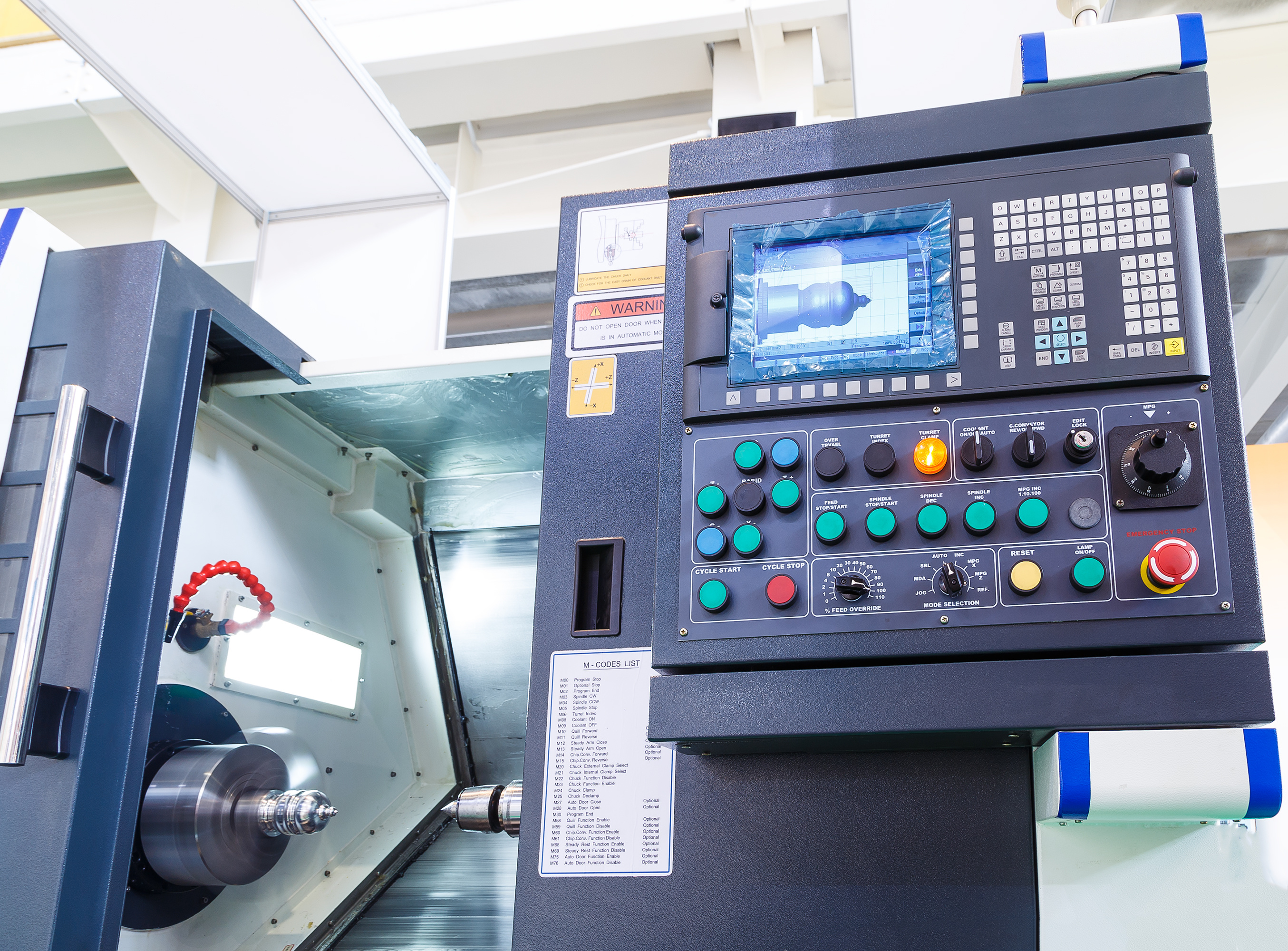
In today’s fast-paced industrial world, efficiency is essential. For OEMs and systems engineers, reducing downtime and improving usability is critical: much of that performance hinges directly on the Human-Machine Interface (HMI) and its underlying panel mount indicators.
As Industry 4.0 accelerates, standard off-the-shelf HMIs fall short. Custom solutions are becoming the norm, offering enhanced functionality, longer operational lifespans, and smarter operator alignment in complex, regulated environments.
Driving Forces Behind Custom HMI Solutions
Generic HMIs cannot always account for the complexity of modern industrial equipment or the severe environments of aerospace, transportation, and heavy industry. Equipment reliability can be compromised when HMIs are not explicitly designed for the target application environment, regulatory standards, or daily workflow nuances that end-users face.
Beyond core functionality, pressure to comply with international regulatory frameworks like IEC 60204-1 and ISO 13849-1 is intensifying. This intersection of regulatory compliance, ergonomic operator needs, and efficiency goals demands expertly engineered custom HMI solutions.
Precision Engineered for Performance: From Design to Deployment
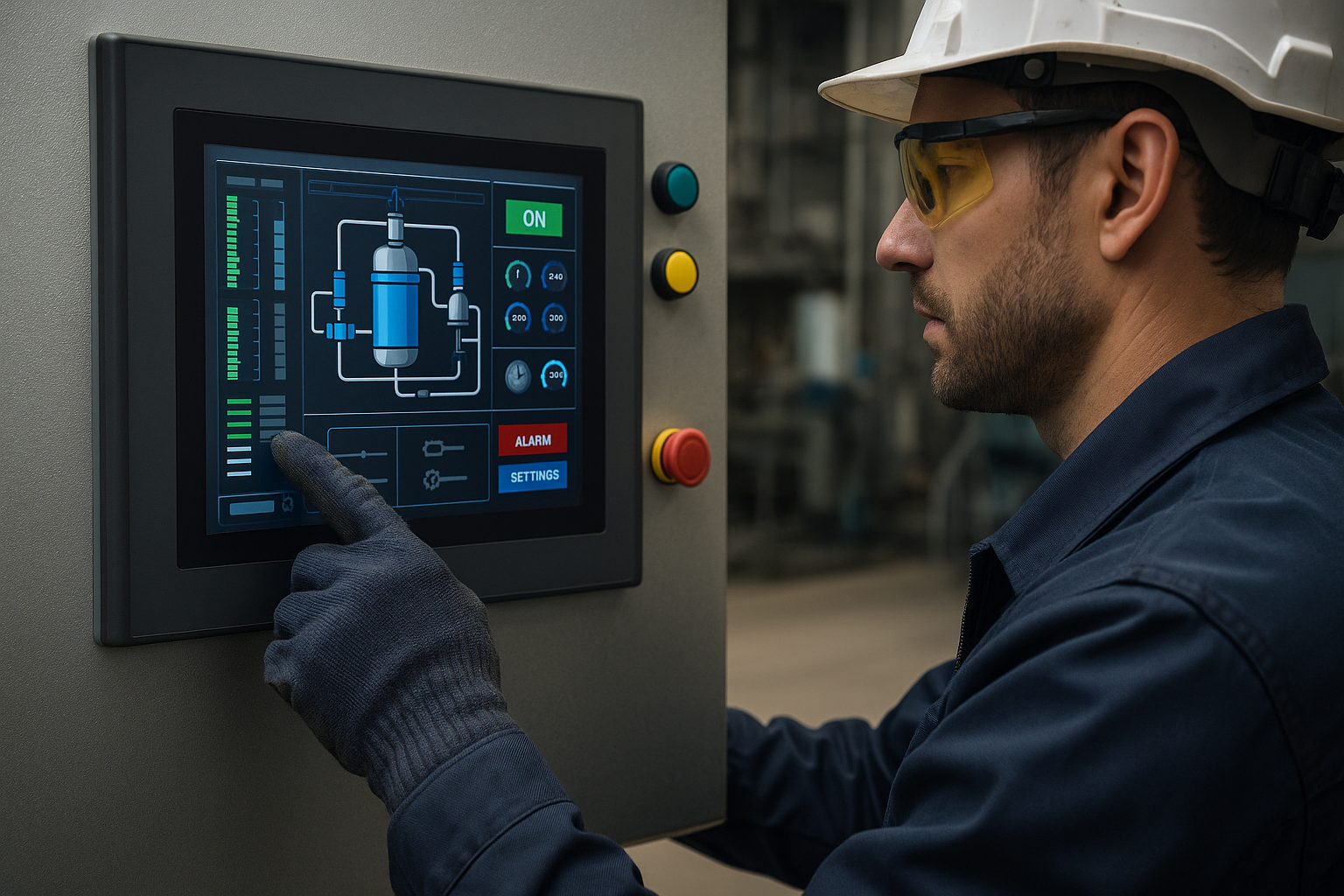
VCC's experience in the solution life cycle (from early discovery discussions to production build) allows engineering teams to address industry-specific HMI requirements. Custom HMI solutions may involve optimizing tactile feedback for gloved-hand operation common in oil and gas plants or using specialized optoelectronic components for enhanced visibility in medical or military devices. Key technical benefits include:
-
Ergonomics and Usability: Poorly designed HMIs account for nearly $70 billion in annual losses due to operator error, visual misinterpretation, or fatigue. Custom HMI solutions eliminate these failure modes by configuring control surfaces, indicator positions, and actuation feedback to match real-time user expectations and site conditions.
-
Environment-Readiness: Environmental factors like chemical corrosion, humidity, UV exposure, and wide temperature swings mean OEMs must select the right materials and interface components, ranging from optical polycarbonate windows to IP67-sealed buttons. For example, VCC engineered push-button assemblies for offshore wind facilities that maintain tactile accuracy after 5 million actuations under full exposure to salt fog.
-
Intelligent Integration: Future-ready HMIs extend beyond basic switches and buttons. They incorporate modular light pipes, illuminated switches, and advanced status signaling devices that interact seamlessly with PLCs and IoT-enabled diagnostics. VCC's custom indication arrays route vital sensor and status feedback directly to operators, closing the communication gap and accelerating fault isolation.
-
Branding and Differentiation: In crowded B2B equipment markets, maintaining a distinct visual identity while ensuring maximum optical clarity provides a competitive edge. VCC's in-house engineering and fabrication offer clients tailored options, including corporate branding colors, laser-engraved legend plates, and custom backlighting to deliver unique panel designs that reinforce market positioning.
Engineering Value: Agile Development, ROI, and Real-World Impact
Custom HMIs represent far more than a design preference: they drive measurable return on investment and streamline equipment manufacturing. Generic interfaces often lead to costly field retrofits and unexpected downtime. In contrast, VCC utilizes an agile engineering workflow based on rapid prototyping, iterative design feedback, and low-volume production flexibility to accelerate time-to-market and eliminate late-stage engineering change orders (ECOs).
This collaborative, agile approach delivers proven operational results across demanding field environments:
-
Measurable Efficiency Gains: Implementing high-brightness LEDs and tactile control switches enabled one client to achieve a 16% increase in assembly line efficiency. Overall, well-engineered HMIs can reduce unexpected equipment downtime by up to 33% while lowering long-term maintenance costs.
-
Rail Fleet Retrofit Case Study: For a vibration-heavy cab environment requiring gloved operation, VCC engineered oversized, sealed switches featuring domed lenses and CAN-bus protocol integration, significantly reducing operator input errors and improving safety.
-
Food Processing Line Case Study: To withstand high-pressure washdowns and chemical exposure, a client deployed VCC corrosion-resistant, sealed indicators, doubling HMI interface lifespan in high-moisture processing zones.
Built for Compliance, Engineering Protection, and System Diagnostics
VCC custom HMI is engineered to meet or exceed global regulatory standards, including UL, CE, IEC, and DIN requirements. We integrate critical hardware protection and diagnostic features directly into the interface assembly:
-
Electromagnetic Interference (EMI) and Electrostatic Discharge (ESD) Protection: VCC custom HMIs are engineered to operate without fault in electrically noisy industrial environments. Utilizing internal shielding, ferrite beads, and transient voltage suppression (TVS) diodes, these assemblies prevent false signals and protect sensitive electronics against high-voltage ESD events.
-
Thermal and Optical Tuning: Optical tuning ensures uniform status indication with broad viewing angles and minimal light bleed. Concurrent thermal tuning manages heat dissipation efficiently, preventing LED degradation and maintaining long-term luminous stability.
-
Integrated Self-Diagnostic Capabilities: Advanced HMI assemblies perform real-time internal monitoring of key circuit nodes. By acting as an edge diagnostic node, the interface gathers component health data to provide early fault warnings, supporting predictive maintenance models and minimizing unplanned downtime in connected IoT environments.
Powering Your Competitive Edge
Industrial leaders do not just install interfaces: they design smarter, fully integrated systems. VCC bridges design intent with real-world operational performance through custom HMI solutions engineered for long-term scalability, environmental reliability, and intuitive usability.
While many suppliers manufacture individual HMI components, VCC's core value lies in synthesizing these discrete optoelectronic parts into a cohesive, fully engineered system. This comprehensive approach elevates VCC from a simple component vendor to a specialized design partner for industrial OEMs.
Frequently Asked Questions (FAQs)
How Are Custom HMIs Different From Standard Off-the-Shelf HMIs?
Custom HMIs are engineered specifically for an application's environmental hazards, user workflows, and electrical interfaces, whereas standard HMIs rely on generic enclosures and fixed component layouts. Custom solutions integrate application-specific IP67 ingress sealing, custom optoelectronic indicator arrays, and optimized tactile feedback that reduce operator error and improve long-term system reliability.
Can VCC Support Both HMI Prototyping and Full-Scale Production?
Yes, VCC supports the complete HMI solution lifecycle, offering rapid 3D prototyping, optical performance simulation, low-volume pilot builds, and scalable full-volume manufacturing. This end-to-end support ensures design concepts are validated against mechanical and thermal constraints before moving into full production.
Are VCC's Custom HMI Solutions Designed to Meet Regulatory Compliance Standards?
Yes. VCC custom HMIs are designed and tested to meet international regulatory standards, including UL, CE, RoHS, cURus, IEC 60204-1, and ISO 13849-1 requirements. VCC provides comprehensive technical documentation, test reports, and material traceability sheets to streamline client compliance audits.
Which Industries Benefit Most From Custom HMI Engineering?
Custom HMI solutions provide maximum value in mission-critical and regulated sectors, including transportation, energy and utilities, industrial automation, aerospace, medical devices, and food processing. These industries require interfaces tailored for high vibration, severe chemical washdowns, high ambient glare, or gloved-hand operation.
What Is the Typical Turnaround Time for Developing a Custom HMI Solution?
Development timelines typically range from several weeks for modified standard components to several months for complex, fully custom HMI assemblies. Timelines depend on project complexity, environmental sealing requirements, custom optical tooling, and regulatory certification testing.