Back to Articles
What are Light Guides and What Do They Do For Me?
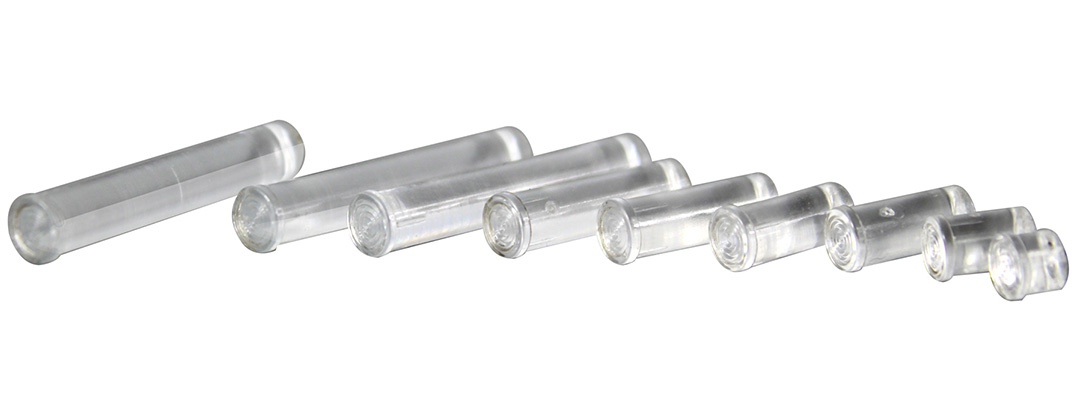
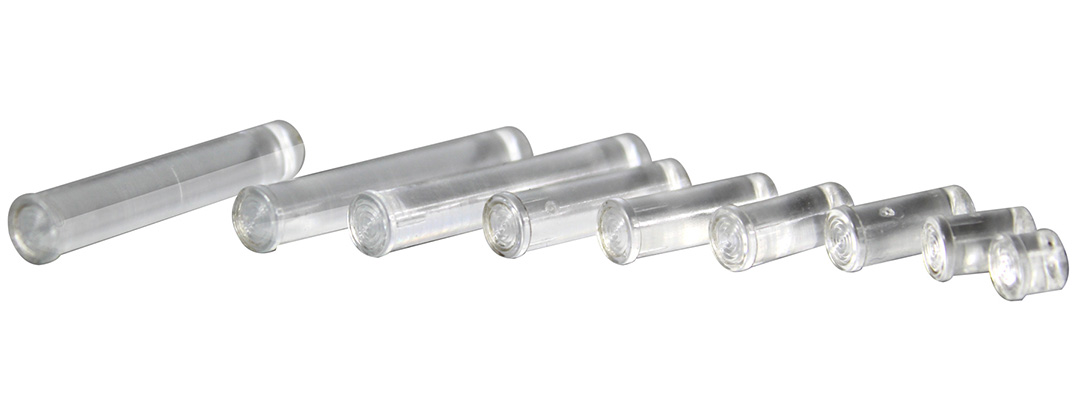
Light guides carry light from the point where it is generated to the point where it needs to be seen, which lets engineers keep an LED on the PCB while its light appears on a panel or dashboard.
Technically, a light guide is any device that allows light to travel from a source as large as the sun or as small as an LED to a point at some predetermined distance. In a successful LED light guide application, this light transfer is accomplished with minimal losses.
What are the Most Efficient Light Guide applications?
The most efficient LED light guide applications combine a controllable light source, a suitable optical material, and design elements that limit light loss between the source and the viewing point.In practice, that means using optical grade acrylics or other optical materials such as polycarbonates, epoxies, and glass. Controllable sources used in light guide applications are typically LEDs. LEDs and light guides create effective transmission of light from a PCB to a controller or dashboard as well as a number of additional applications. Efficient light guide systems will also include the following design elements:
Effective Coupling
Without effective coupling from the source to the light guide, your system will be inefficient. Typical light guide applications include a flux coupling to an LED device. The light guide entrance must be either flat (for surface-mounted LEDs) or concave and contoured to match the mounting surface.To support that coupling, special lenses for light guides can be manufactured to suit various types of LEDs. Typically, surface-mounted LEDs have a built-in lens, and the prepared end of the light guide is inserted inside the mount to make the connection.
Efficient Transmission
Efficient transmission depends on several factors including the light guide material, polished connection surfaces, and effective capture at the receiving end.
Moisture Sealed Light Guides
Many outdoor light guide applications and hazardous locations will require moisture and dust sealant to provide an effective transfer of light through your chosen light guide.
No Conduction or Transfer of Electrostatic Discharge (ESD) Pulses
LED circuits, especially when mounted on a PCB, are susceptible to losses and damage from ESD pulses. An effective light guide provides electrostatic discharge protection that eliminates this risk and the need for an additional ESD protection circuit.
Electromagnetic Interference Immunity
For light guides implemented in industrial environments, electromagnetic interference (EMI) exists, as various devices emit electromagnetic waves. An effective light guide is immune to this interference.To meet these requirements, VCC provides an extensive variety of light guides called VCC LitePipes. VCC says these patented light guides use the most efficient and technologically advanced design elements. Whether you have an indoor, outdoor, high-interference, or hazardous application, we have the right light guide for your project. Contact our light guide engineers today for more details and selection assistance.
Frequently Asked Questions (FAQs)
How Do You Choose the Right Light Guide for an Application?
Choose a light guide based on the LED type, required light transmission, optical material, mounting configuration, available space, and environmental conditions. Consider coupling efficiency, surface finish, moisture protection, and exposure to electromagnetic interference (EMI) to achieve reliable performance.
Which Materials Are Commonly Used for Light Guides?
Common light guide materials include optical-grade acrylic (PMMA), polycarbonate, epoxy resins, and glass. The best material depends on the application's optical performance requirements, mechanical durability, temperature range, and environmental exposure.
Do Light Guides Provide Electrostatic Discharge Protection?
Yes. Because an effective light guide does not conduct or transfer ESD pulses, it provides electrostatic discharge protection for LED circuits mounted on a PCB. That isolation can also remove the need for an additional ESD protection circuit.
Can Light Guides Be Used in Outdoor and Industrial Environments?
Yes. Light guides can be designed for outdoor and industrial applications, provided they meet the required environmental and operating specifications. Moisture and dust sealing, suitable materials, and appropriate system-level protection help support reliable performance in demanding conditions.