Back to Articles
Optical performance
A light pipe is an optical transmission element, a solid transparent rod or fiber that routes LED output from the PCB to a panel-mounted indicator. The selection between rigid and flexible architectures is not merely a matter of cost or routing distance; it directly determines how much light energy arrives at the viewing surface, how uniform that output appears, and whether optical crosstalk contaminates adjacent indicators.
Rigid pipes transmit light efficiently over short distances (typically under 75 mm) and are appropriate when PCB layout allows straight-line access to the panel. Flexible fiber assemblies sacrifice some luminous efficiency to provide routing freedom but introduce additional coupling interfaces, each of which is an attenuation and alignment risk.
Photometric Specification — What Datasheets Don't Tell You by Default
Engineering validation
Luminous intensity (candelas) is the quantity most frequently cited on LED datasheets, but it is only meaningful for a single viewing angle. What engineers designing human operators actually need is the full directional emission profile, the angular distribution of output intensity, this Lambertian or modified-Lambertian pattern determines whether an indicator is legible at oblique viewing angles, whether a dome or flat lens profile is needed, and whether the LED's half-angle matches the acceptance cone of the light pipe being used.
Without validating this coupling efficiency, an LED that appears adequately bright at 0° may be unreadable at 45°, a failure mode that never appears in lab bench testing but surfaces immediately on the factory floor or clinical workspace.
Thermal & environmental risk — through-hole vs. SMD under operating conditions
Through-hole LED mounting provides mechanical retention across PCB layers and superior resistance to vibration-induced solder joint fatigue, the dominant failure mode in transportation, heavy industrial, and certain surgical robotics applications. SMD packages offer density and reflow-process compatibility but sit at the PCB surface, where they are more exposed to thermal gradient stresses during power cycling.
The selection is not simply a form-factor decision; it should be driven by a vibration and thermal cycling analysis consistent with IEC 60068 or equivalent qualification standards. UV and IR variants introduce additional considerations: UV LEDs used in medical sterilization pathways carry optical power levels that require careful near-field hazard analysis, and their intensity degrades non-linearly with junction temperature.
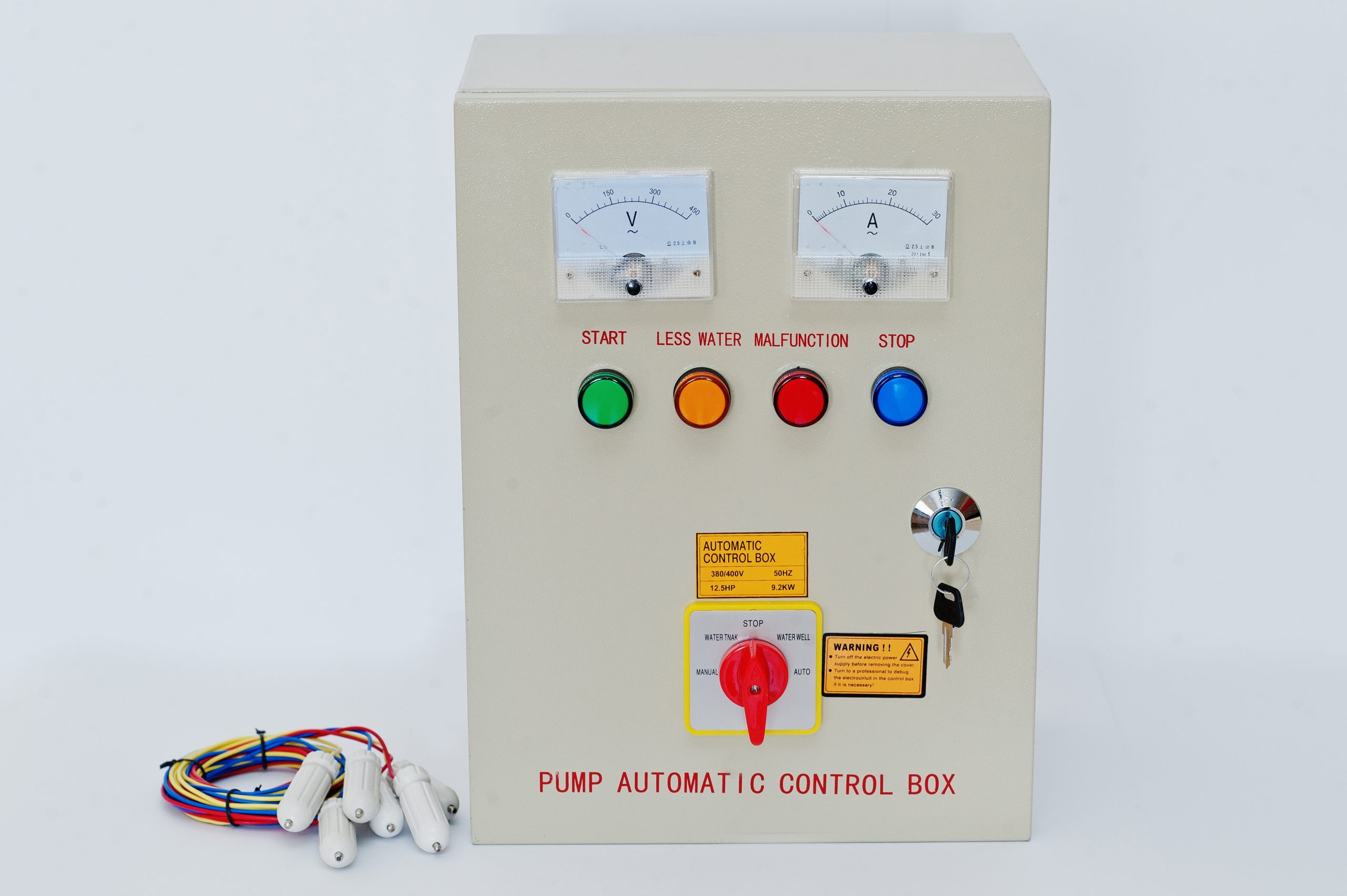
Lens Geometry and Environmental Ingress — The Panel Interface as a Failure Point
Real-world application risk
The lens at the panel face is both an optical element and an environmental seal. Dome lenses maximize viewing angle but increase the surface area exposed to contamination, impact and UV degradation over time. Flat lenses minimize protrusion and simplify panel cleaning relevant in pharmaceutical manufacturing and sterile processing environments, but constrain the angular visibility window.
IP67-rated assemblies introduce sealing geometry at the panel penetration that affects optical path alignment; any deformation of the seal under repeated thermal cycling or panel flex can shift the lens position relative to the light pipe axis, attenuating transmission. This mechanical drift is rarely tested in qualification but can accumulate to visible degradation over a product's installed lifespan.
System integration
LED indication is frequently treated as a peripheral detail of device design, yet in regulated environments it functions as a safety-critical human-machine interface element. IEC 60601-1 for medical electrical equipment and IEC 61010 for industrial measurement systems both address alarm and status indication in terms of legibility, color coding conventions, and fail-safe behavior.
A compliant device is one where indication state accurately reflects system state under all operating and fault conditions, including partial power loss, EMI-induced transients, and software fault states. Engineers must validate not just that an LED illuminates correctly under normal conditions, but that it fails gracefully; does it go dark or remain lit on a power rail fault? Does it correctly indicate alarm conditions under worst-case ambient lighting? These questions require system-level test scenarios, not component-level bench testing.